
Submissions to Canadian and U.S. Securities Commissions Allege Canadian Mine in the Brazilian Amazon Has Misrepresented Risks to Investors
University legal clinics have filed separate requests with securities commissions in Canada and the U.S. to investigate alleged misrepresentations by a Canadian company seeking to mine for potash in the Brazilian Amazon.
The requests to the U.S. Securities and Exchange Commission (SEC) and Ontario Securities Commission (OSC) — filed by the Cardozo Law Institute in Holocaust and Human Rights (CLIHHR) and the University of Toronto Jackman Law’s International Human Rights Program (IHRP), respectively—submit that Canadian company Brazil Potash is not adequately informing investors of the risks of its mining project.
"Given that the Autazes Project is BP’s only material asset, investors deserve full disclosure of the serious legal challenges, lack of Indigenous consent, and environmental risks that threaten whether this project can lawfully and responsibly proceed,” said Jocelyn Getgen Kestenbaum, CLIHHR Faculty Director.
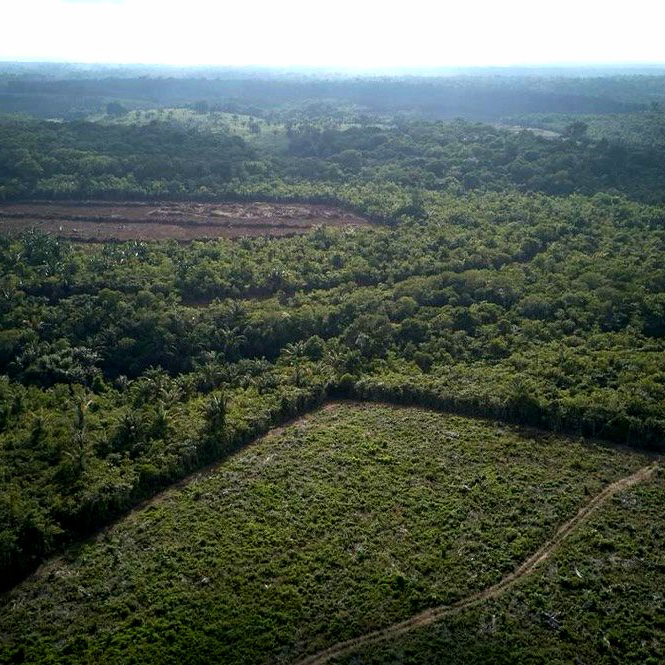
The requests submit that Brazil Potash has allegedly failed to disclose and misrepresented serious legal, social, and environmental risks of the Autazes Project. The requests draw extensively upon interviews conducted with Mura Indigenous community members and leaders in villages located near planned mining infrastructure sites and expected to be among the most severely affected by the project.
Brazil Potash’s Autazes Project is the subject of ongoing lawsuits in Brazil, including a civil action to compel the formal demarcation of the land on which the Autazes Project is located as Indigenous land. If demarcation is successful, it may render the mine’s license to operate invalid.
“At stake for my community is the destruction of our core ways of life and deep spiritual connection to the land as Mura Peoples” said Filipe Gabriel Mura, Chief of the Mura community of Lago do Soares. “Lago do Soares remains steadfast in our demands for official demarcation of our territories as provided by the Brazilian Constitution and for an end to Brazil Potash’s Autazes Project.” The U.S. $2.5 billion mining project, meant to extract and refine sylvinite from the Amazon River into potash, the principal ingredient in fertilizer, began exploratory drilling as early as 2010 and is currently under development.
The U.S. $2.5 billion mining project, meant to extract and refine sylvinite from the Amazon River into potash, the principal ingredient in fertilizer, began exploratory drilling as early as 2010 and is currently under development. Read the full requests here.
Contact:
For information pertaining to the OSC Complaint: Sandra Wisner, IHRP Director mailto:sandra.wisner@utoronto.ca Nabila Khan, IHRP Research Associate mailto:nabila.khan@utoronto.ca
The International Human Rights Program (IHRP) at the University of Toronto Henry N.R. Jackman Faculty of Law serves as a center for international human rights work, through which experienced lawyers, faculty, and law students engage in meaningful social change.
For information pertaining to the SEC Complaint: Jocelyn Getgen Kestenbaum, CLIHHR Faculty Director mailto:jocelyn.getgen@yu.edu
The Cardozo Law Institute in Holocaust and Human Rights (CLIHHR, pronounced ‘clear’) is a leading global center for the study, teaching and promotion of human rights. CLIHHR strengthens laws, norms and institutions to prevent mass atrocities, protect affected populations and rebuild societies in the wake of atrocities.
For on-the-ground information: Fernanda Frizzo Bragato, Professor at the Federal University of Rio Grande do Sul (Brazil) fernanda.bragato@ufrgs.br